RESIN & EPDM MONOMER
DCPD (Dicyclopentadiene)
Dicyclopentadiene for unsaturated polyester and hydrocarbon resins, EPDM, adamantane and high-energy fuels. Typical batch analysis: 98.58% DCPD, 0.04% cyclopentadiene. Supplied in 193 kg iron drums or ISO tanks.
Samples are available for qualification testing before a bulk order.
Overview
DCPD (Dicyclopentadiene)
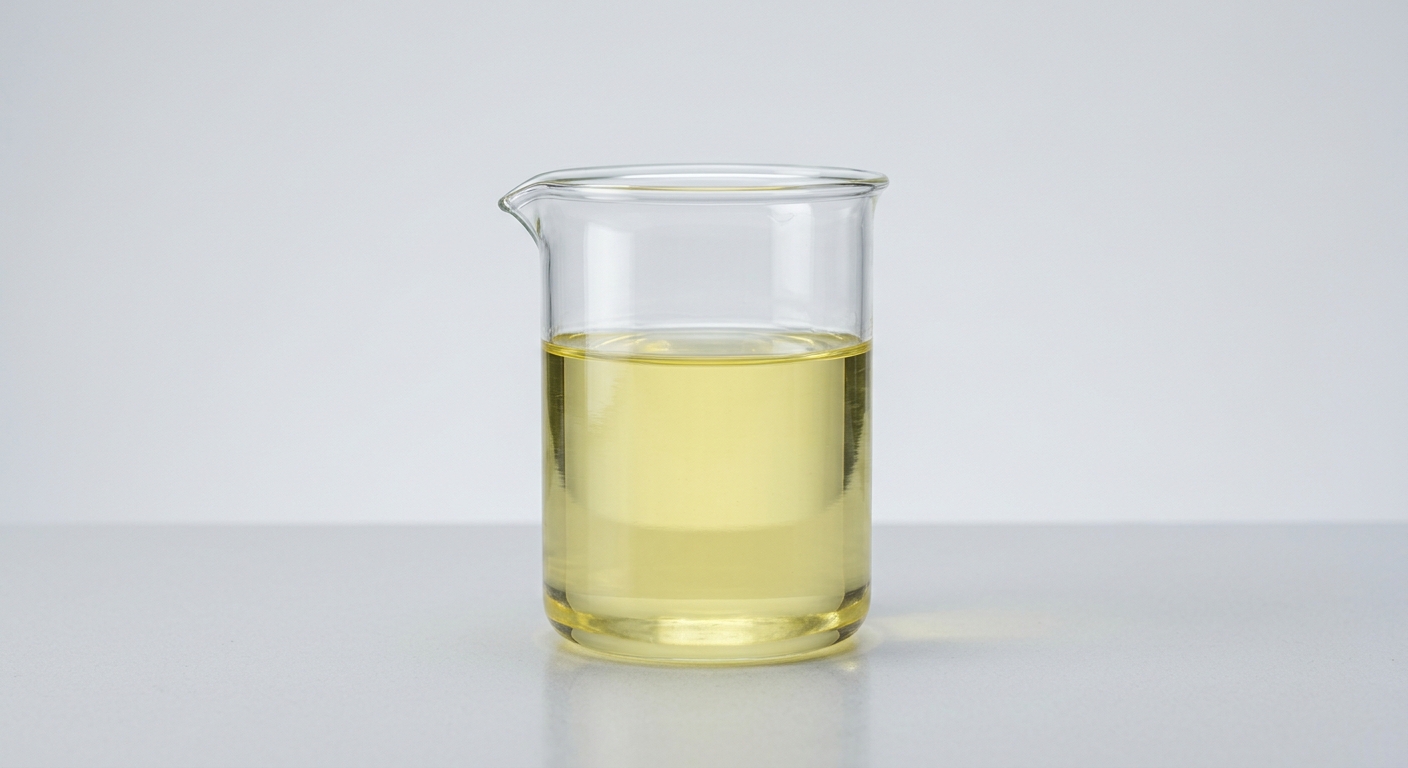
Dicyclopentadiene (DCPD, C₁₀H₁₂) is the Diels–Alder dimer of cyclopentadiene and one of the main products of C5 fraction processing. It is a raw material for unsaturated polyester and hydrocarbon resins, a third monomer for EPDM rubber, and a precursor for metallocenes, adamantane and high-energy-density fuels.
The figures on this page are a typical batch analysis — 98.58% DCPD, 0.04% cyclopentadiene and 0.43% methylcyclopentadiene dimer — not guaranteed minimums. The specification for an order is agreed at quotation.
DCPD melts at about 32 °C. It is solid at normal ambient temperatures and drums need gentle warming before the product can be pumped.
Product identification
Product identification
| Product Name | DCPD (Dicyclopentadiene) |
| Other names | Dicyclopentadiene; cyclopentadiene dimer |
| CAS Number | 77-73-6 |
| HS Code | 2902.19 |
| Molecular Formula | C₁₀H₁₂ |
| Molecular Weight | 132.20 g/mol |
| Purity | 98.58% (typical batch result, not a guaranteed minimum) |
| Appearance | Colorless crystals (melts at about 32 °C) |
Quality specification
Quality specification
Typical batch analysis
Results from a representative production batch, not guaranteed minimums. The specification for an order is agreed at quotation.
| Component | Typical result | Unit |
|---|---|---|
| Dicyclopentadiene (DCPD) | 98.58 | % |
| Cyclopentadiene (CPD) | 0.04 | % |
| Methylcyclopentadiene dimer | 0.43 | % |
| Appearance | Colorless crystals | - |
What the limits mean
What the limits mean
Typical, not minimum
98.58% is a measured batch result. Contract specifications are set per order, so buyers with a hard purity floor should state it in the enquiry.
Cyclopentadiene 0.04%
Cyclopentadiene is the monomer that DCPD is made from. At room temperature it dimerizes back to DCPD, so its content in the product is normally low.
Methylcyclopentadiene dimer 0.43%
This is the main co-dimer impurity from the C5 stream. It behaves much like DCPD in resin chemistry but matters in high-purity uses such as metallocene or adamantane synthesis.
Applications
Applications by industry
1
Resins and curing agents
Raw material and modifier for thermoset and tackifier resins.
DCPD-modified unsaturated polyester resins
Hydrocarbon resins for adhesives and coatings
Epoxy curing agents
2
Rubber
Third monomer in EPDM rubber.
EPDM termonomer
3
Fuels and specialty chemicals
Precursor for hydrogenated and cracked derivatives.
High-energy-density fuels (after hydrogenation)
Adamantane
Metallocenes via cyclopentadiene
Pesticide and pharmaceutical intermediates
Technical Specifications
Physical and chemical properties
| Parameter | Value | Unit |
|---|---|---|
| Density (35 °C) | 0.980 | g/cm³ |
| Boiling point | 170 (dissociates to cyclopentadiene on heating) | °C |
| Melting point | 32.5 | °C |
| Flash point (open cup) | 32 | °C |
| Solubility in water | Practically insoluble | - |
| Vapor pressure (25 °C) | 0.18 | kPa |
Packaging & Shipping
Packaging, storage and transport
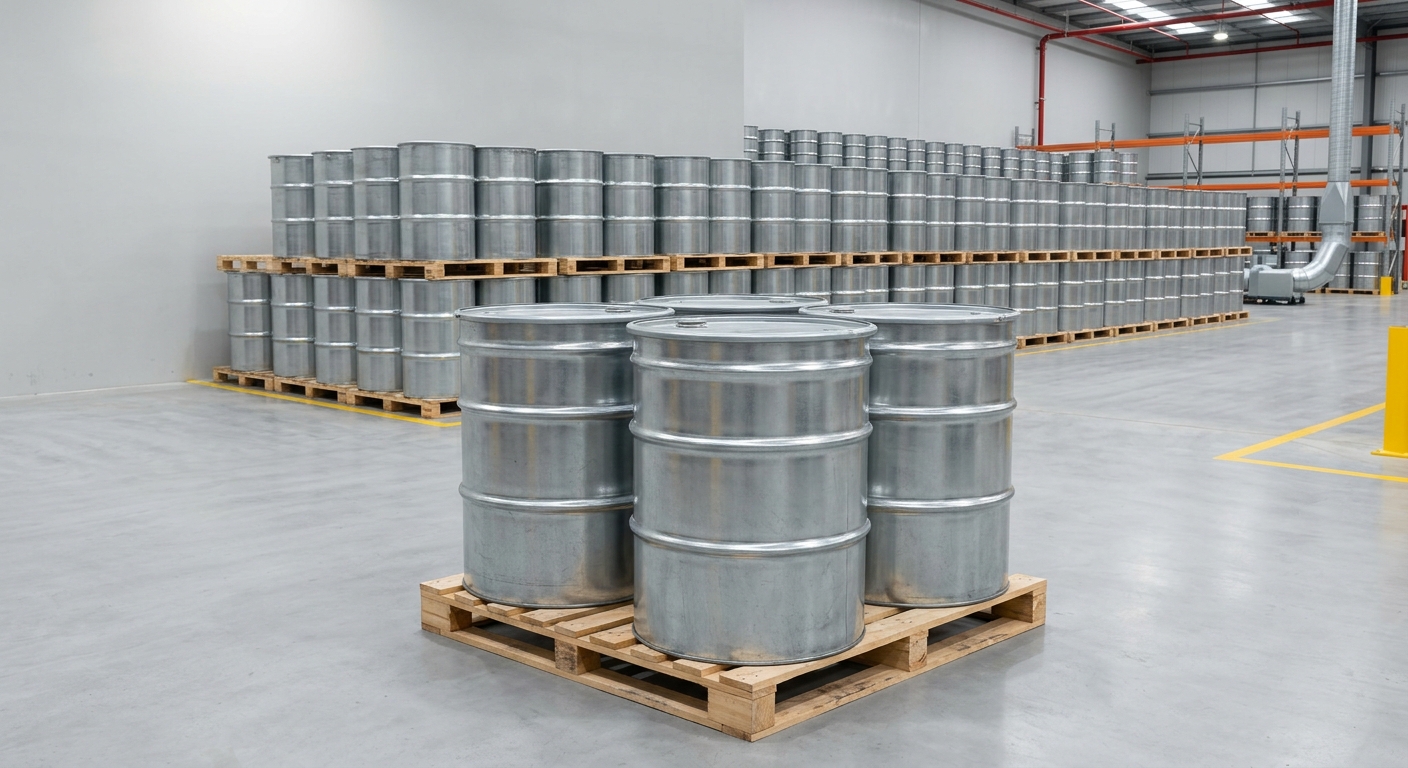
Packaging
Iron drum – 193 kg – Solid below about 32 °C
ISO tank – Bulk
Shipping & Storage
Storage: Solid below about 32 °C. Store in closed containers in a cool, well-ventilated area away from ignition sources and oxidizers. When melting drums, use controlled, gentle heating.
Hazardous: Yes - DG transport required
Origin: Produced by a large-scale C5 processing partner in Shandong, China. Easier Materials is the export partner.
Commercial terms: MOQ, lead time and delivery terms are quoted per enquiry.
Regulatory and transport data
| Item | Value |
|---|---|
| EC number | 201-052-9 |
| UN number | UN 2048 (dicyclopentadiene) |
| Transport class and packing group | Class 3 (flammable liquid), packing group III |
| GHS signal word | Danger |
| GHS hazard statements | H225 (highly flammable liquid and vapor); H302 (harmful if swallowed); H315 (causes skin irritation); H319 (causes serious eye irritation); H335 (may cause respiratory irritation); H411 (toxic to aquatic life with long-lasting effects). Acute inhalation toxicity is notified as H332 or H330 depending on the supplier. |
| HS code | 2902.19 (cyclanes, cyclenes and cycloterpenes, excluding cyclohexane). National 8- and 10-digit tariff lines differ by country. |
| Occupational exposure limits | ACGIH TLV 0.5 ppm (8-hour average) and 1 ppm (short-term); MAK 0.5 ppm |
| Inventory listings | The substance is listed on the Australian AIIC and has a New Zealand HSNO approval (HSR001123, approved with controls). A registration dossier for the substance is on the ECHA list (EU REACH); whether it covers a given import route is for the importer to confirm. |
Application chemistry
DCPD is bought for different chemistry at different purities. Unsaturated polyester resins are the main outlet: DCPD-modified UPR is used for large fiberglass-reinforced parts, with better heat resistance and lower shrinkage than conventional UPR. In hydrocarbon resins, DCPD is a monomer, and the hydrogenated resins are tackifiers for hot-melt adhesives, compatible with EVA and styrenic block copolymers. DCPD novolac epoxy and benzoxazine resins contain a saturated multicyclic structure, and laminates based on them are reported at dielectric constant below 4.0 and dissipation factor below 0.009 at 1 GHz.
Above 150 °C, DCPD cracks to cyclopentadiene (retro-Diels–Alder). Cyclopentadiene and 1,3-butadiene give vinyl norbornene, which isomerizes to ethylidene norbornene, an EPDM diene. DCPD is also used directly as an EPDM termonomer: it carries 3 allylic hydrogens against up to 6 for ethylidene norbornene, so cure rate differs, and sulfur-cured DCPD-EPDM does not devulcanize but crosslinks further. Cyclopentadiene is also the starting point for metallocenes.
Norbornene, made from DCPD and ethylene, is the monomer of cyclic olefin copolymers (copolymerized with ethylene over metallocene catalysts) and, by ring-opening metathesis polymerization followed by hydrogenation, of cyclic olefin polymers; these are glass-clear, low-dielectric-loss, low-moisture-absorption materials with glass transition temperatures of about 100–190 °C.
Poly-DCPD, a thermoset made by ring-opening metathesis polymerization, is molded by reaction injection into large parts such as agricultural and construction equipment panels, truck and bus body panels and chlor-alkali equipment. Patents from the 1980s and 1990s report that RIM-grade DCPD was in the mid-80% range and that even 97% DCPD could be unacceptable without further purification (distillation and alumina treatment), because impurities deactivate the metathesis catalyst. Two-stage hydrogenation gives endo-tetrahydrodicyclopentadiene, which is isomerized to the exo form (a component of JP-10 jet propellant); harsher conditions with aluminium chloride give adamantane.
How this grade compares
Published DCPD sales specifications list grades at a minimum of 82%, 92% and 94% DCPD, with cyclopentadiene limited to 0.05% maximum. The typical batch analysis on this page, 98.58% DCPD and 0.04% cyclopentadiene, is above the 94% grade, and its cyclopentadiene content is below that limit. It is not a guaranteed minimum.
A process that needs a limit on peroxides or a specific inhibitor states it in the enquiry.
Storage and shelf life
DCPD can form explosive peroxides, so the International Chemical Safety Card advises storing it only if stabilized, and peroxides are checked before distillation. Published DCPD grades are inhibited with BHT or p-TBC at 100–200 ppm, with peroxides limited to 15 ppm.
Keep cool and dark and away from strong oxidizers. Laboratory suppliers specify below 15 °C in the dark or 2–30 °C.
Flash point 32 °C (open cup); explosive limits 0.8–6.3 vol%; a closed system is used above 32 °C.
Decomposition to cyclopentadiene becomes appreciable above about 150 °C (about 160 °C in a published specification) and is accelerated by iron powder. Cyclopentadiene dimerizes back at room temperature (about 50% in 24 hours) and is not sold commercially as the monomer.
Published specifications use mild-steel or stainless-steel tanks, grounded against static.
Documentation
Documentation
TDS and MSDS available on request
FAQ
Frequently Asked Questions
Related Products
Related Products
Request a Quote — DCPD (Dicyclopentadiene)
Receive a customized quote within 24 hours. Our technical team is ready to assist with specifications, compatibility, and pricing.