FRAGRANCE & PHARMA INTERMEDIATE
Cyclopentanone
Cyclopentanone at ≥99% with cyclopentanol ≤0.1%, CPME ≤0.05% and moisture ≤0.05%, for fragrance chemicals such as methyl dihydrojasmonate, pharmaceutical and insecticide intermediates, and wet electronic chemicals.
Samples are available for qualification testing before a bulk order.
Overview
Cyclopentanone
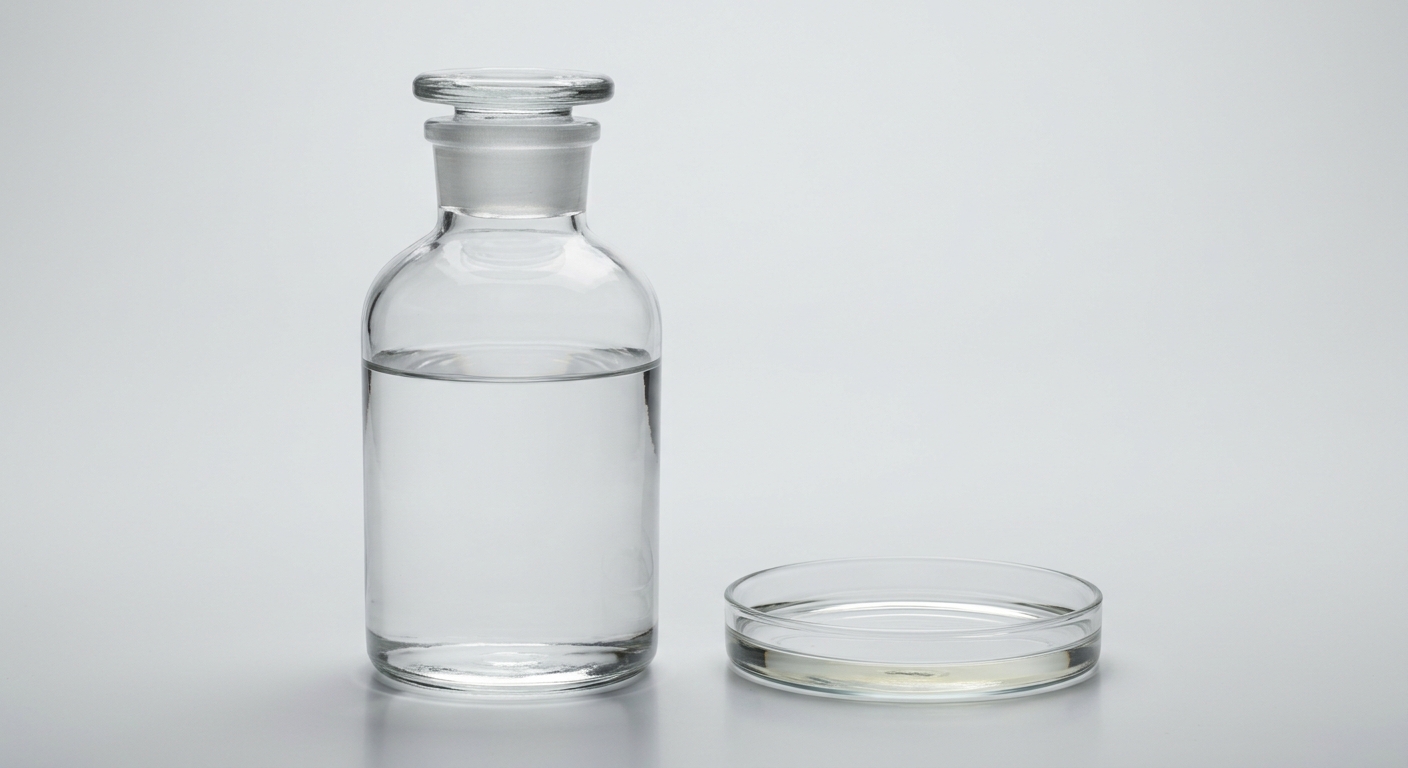
Cyclopentanone (C₅H₈O) is a five-membered cyclic ketone used mainly as a building block. It is the starting point for jasmine-type fragrance materials such as methyl dihydrojasmonate, for a range of pharmaceutical and insecticide intermediates and for rubber chemicals.
The grade on this page is ≥99% cyclopentanone. Two organic impurities are capped individually — cyclopentanol (≤0.1%), the corresponding alcohol, and CPME (≤0.05%) — rather than reported only as part of total purity. Moisture is held to ≤0.05%.
Cyclopentanone is also used as a ketone solvent, including in wet electronic chemicals.
Product identification
Product identification
| Product Name | Cyclopentanone |
| CAS Number | 120-92-3 |
| HS Code | 2914.29 |
| Molecular Formula | C₅H₈O |
| Molecular Weight | 84.12 g/mol |
| Purity | ≥99% |
| Appearance | Colorless clear liquid |
Quality specification
Quality specification
Sales specification
| Parameter | Specification | Unit |
|---|---|---|
| Cyclopentanone content | ≥ 99 | % |
| Cyclopentanol | ≤ 0.1 | % |
| CPME (cyclopentyl methyl ether) | ≤ 0.05 | % |
| Moisture | ≤ 0.05 | % |
What the limits mean
What the limits mean
Cyclopentanol ≤0.1%
Residual cyclopentanol is an alcohol, so it can take part in esterification or condensation side reactions. Capping it at 0.1% keeps that contribution small.
CPME ≤0.05%
A separate limit on CPME lets users account for ether residue in their own product instead of inferring it from total purity.
Moisture ≤0.05%
Low water content matters where cyclopentanone feeds base-catalyzed condensations, or where it is used as a solvent in moisture-sensitive formulations such as electronic chemicals.
Applications
Applications by industry
1
Fragrance materials
Starting material for jasmine-type aroma chemicals.
Methyl dihydrojasmonate
Other cyclopentanone-derived fragrance intermediates
2
Pharmaceutical and agrochemical intermediates
Five-membered ring ketone for building active-ingredient intermediates.
Pharmaceutical intermediates
Insecticide intermediates
3
Rubber, electronics and solvent use
Raw material for rubber chemicals and a ketone solvent for formulated products.
Rubber synthesis and rubber chemicals
Wet electronic chemicals
General ketone solvent
Technical Specifications
Physical and chemical properties
| Parameter | Value | Unit |
|---|---|---|
| Density (20 °C) | 0.949 | g/cm³ |
| Boiling point | 130.6 | °C |
| Melting point | -58.2 | °C |
| Flash point | 26 | °C |
| Solubility in water | Slightly soluble | - |
| Vapor pressure (25 °C) | 1.52 | kPa |
| Refractive index (20 °C) | 1.4366 | - |
Packaging & Shipping
Packaging, storage and transport

Packaging
Iron drum – 190 kg
ISO tank – Bulk
Shipping & Storage
Storage: Store in closed containers in a cool, well-ventilated area away from ignition sources, strong oxidizers and strong bases.
Hazardous: Yes - DG transport required
Origin: Produced by a large-scale C5 processing partner in Shandong, China. Easier Materials is the export partner.
Commercial terms: MOQ, lead time and delivery terms are quoted per enquiry.
Regulatory and transport data
| Item | Value |
|---|---|
| EC number | 204-435-9 |
| CLP Annex VI index number | 606-025-00-9 (harmonized classification entry) |
| UN number | UN 2245 (cyclopentanone) |
| Transport class and packing group | Class 3 (flammable liquid), packing group III |
| GHS signal word | Warning |
| GHS hazard statements | H226 (flammable liquid and vapor); H315 (causes skin irritation); H319 (causes serious eye irritation). Some notifications add H302 or H332. |
| HS code | 2914.29 (ketones; cyclanic, cyclenic or cycloterpenic, without other oxygen function, other than cyclohexanone, methylcyclohexanones, ionones and methylionones) |
| ICH Q3C(R9) residual solvent status | Not listed in the guideline tables, so no class or permitted daily exposure is assigned |
| Inventory listings | The substance is listed on the US TSCA inventory and the Australian AIIC. For EU REACH, registration dossiers for the substance are on the ECHA list; whether they cover a given import route is for the importer to confirm. |
| Further synonyms | Adipic ketone; ketocyclopentane; ketopentamethylene; oxocyclopentane; Dumasin |
Application chemistry
The route from cyclopentanone to methyl dihydrojasmonate, the jasmine-type aroma chemical, has four steps. Cyclopentanone is condensed with n-pentanal (valeraldehyde) under NaOH, KOH or Ba(OH)₂ at about 20–50 °C to give 2-pentylidenecyclopentanone. HCl or HBr in refluxing n-butanol isomerizes this to 2-pentyl-2-cyclopentenone. Dimethyl malonate adds by Michael addition with an alkali alkoxide at -20 to +10 °C, and hydrolysis, decarboxylation and esterification give methyl dihydrojasmonate as a mixture of about 9:1 trans and cis isomers.
The same two raw materials lead to other fragrance materials. Baeyer–Villiger oxidation of 2-pentylcyclopentanone gives δ-decalactone, which has a peach and coconut character, and a 1980 patent describes 2-cyclopentylcyclopentanone, made by self-condensation of cyclopentanone and hydrogenation, as a fresh, cool perfume ingredient.
Reductive amination of cyclopentanone or cyclopentanol gives cyclopentylamine, through an N-cyclopentyliminocyclopentane intermediate, with cyclopentanol and dicyclopentylamine as by-products. Cyclopentanone is also described as a building block for crop-protection agents and active pharmaceutical ingredients.
In electronics, cyclopentanone is documented as a casting solvent for photosensitive polyimide precursors and in positive and negative photoresist formulations.
How this grade compares
Published industrial cyclopentanone is specified at a minimum of 99%, which is the content limit of the grade here; laboratory synthesis grades are listed at ≥99.0%. The sales specification here also limits cyclopentanol (≤0.1%), CPME (≤0.05%) and moisture (≤0.05%). A process that needs limits on other parameters, such as chloride, acidity or metals, states them in the enquiry.
Documentation
Documentation
TDS and MSDS available on request
FAQ
Frequently Asked Questions
Related Products
Related Products
Request a Quote — Cyclopentanone
Receive a customized quote within 24 hours. Our technical team is ready to assist with specifications, compatibility, and pricing.