PU FOAM BLOWING AGENT
Cyclopentane
Cyclopentane at ≥99% content with n-hexane ≤10 ppm, benzene ≤1 ppm and moisture ≤100 ppm, for rigid polyurethane insulation foam in refrigerators, freezers and cold-storage panels. Supplied in 150 kg iron drums or ISO tanks.
Samples are available for qualification testing before a bulk order.
Overview
Cyclopentane
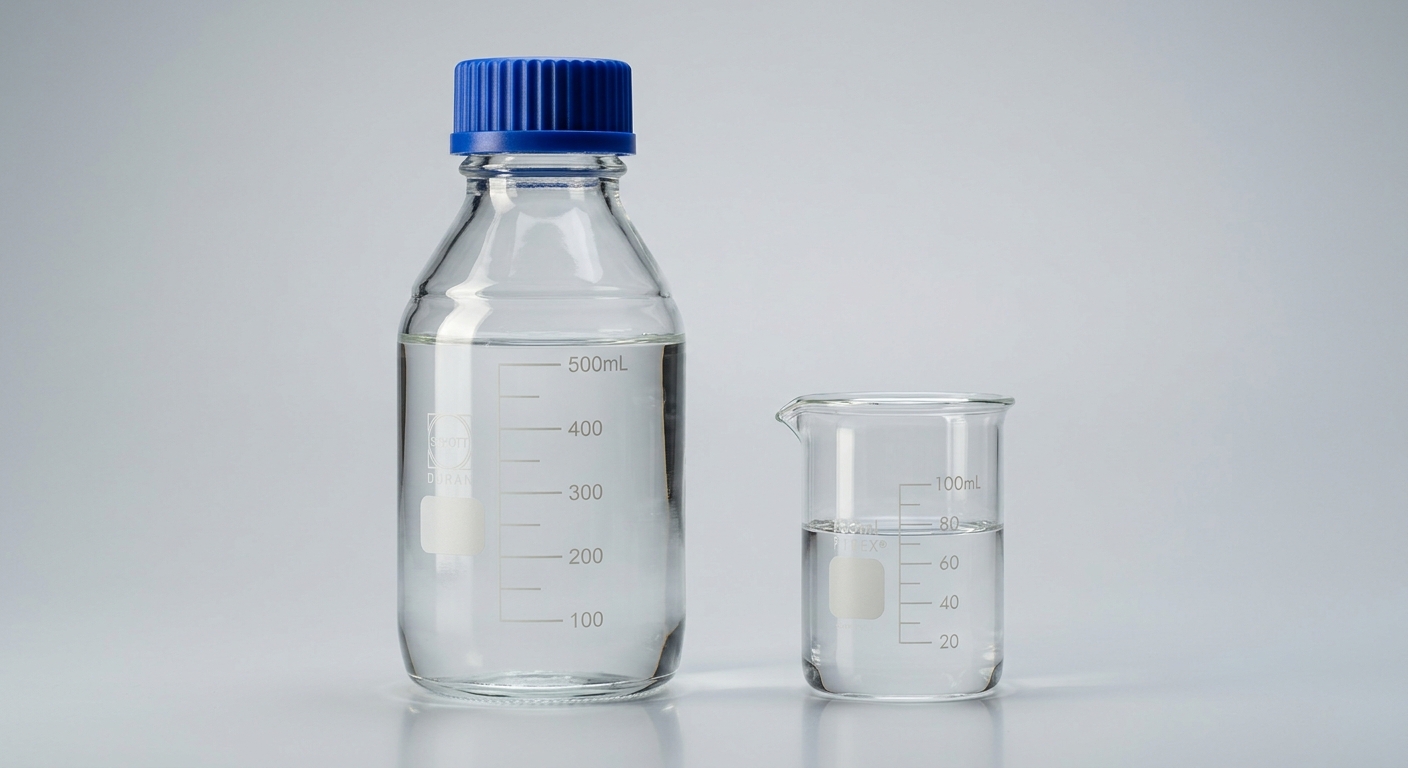
Cyclopentane (C₅H₁₀) is a saturated five-carbon ring hydrocarbon. Its main industrial use is as the physical blowing agent in rigid polyurethane (PU) and polyisocyanurate (PIR) insulation foam, where it replaced CFC-11 and HCFC-141b: it has zero ozone depletion potential and a low global warming potential.
The grade on this page is specified at ≥99% cyclopentane, with n-hexane held to ≤10 ppm, benzene to ≤1 ppm and moisture to ≤100 ppm. These limits are written for appliance and panel foam lines, where water in the blowing agent reacts with isocyanate and benzene content is restricted for workplace-exposure reasons.
Cyclopentane is also used as a fast-evaporating non-polar solvent and as a reference compound in chromatography.
Product identification
Product identification
| Product Name | Cyclopentane |
| CAS Number | 287-92-3 |
| HS Code | 2902.19 |
| Molecular Formula | C₅H₁₀ |
| Molecular Weight | 70.13 g/mol |
| Purity | ≥99% |
| Appearance | Colorless, clear liquid |
Quality specification
Quality specification
Sales specification
| Parameter | Specification | Unit |
|---|---|---|
| Cyclopentane content | ≥ 99 | % |
| n-Hexane | ≤ 10 | ppm |
| Benzene | ≤ 1 | ppm |
| Moisture | ≤ 100 | ppm |
| Appearance | Colorless, clear liquid | - |
What the limits mean
What the limits mean
Moisture ≤100 ppm
Water reacts with isocyanate to form CO₂ and urea links, which adds unplanned blowing and shifts foam density. A 100 ppm ceiling keeps that side reaction small and predictable in pre-blended polyol.
n-Hexane ≤10 ppm
n-Hexane is a common C6 impurity in C5 streams and boils about 20 °C higher than cyclopentane. Holding it at trace level keeps the evaporation behavior of the blowing agent close to that of pure cyclopentane.
Benzene ≤1 ppm
Benzene is a regulated carcinogen. A 1 ppm limit simplifies workplace-exposure and product-compliance assessments at foam plants.
Applications
Applications by industry
1
Appliance insulation
Physical blowing agent for the rigid PU foam injected between the liner and outer shell of refrigeration equipment.
Domestic refrigerator and freezer cabinets and doors
Commercial display cabinets and chest freezers
Water heaters and cold boxes
2
Construction and cold-chain panels
Blowing agent for PU and PIR insulation made on continuous and discontinuous panel lines.
Sandwich panels for cold rooms and cold storage
PIR insulation boards
Pipe and tank insulation
3
Solvent and laboratory use
Low-boiling, non-polar hydrocarbon solvent that evaporates quickly and leaves no residue.
Extraction and cleaning where a fast-evaporating alkane is needed
Reference standard in chromatography
Technical Specifications
Physical and chemical properties
| Parameter | Value | Unit |
|---|---|---|
| Density (20 °C) | 0.751 | g/cm³ |
| Boiling point | 49.2 | °C |
| Melting point | -93.9 | °C |
| Flash point | -37 | °C |
| Solubility in water | Practically insoluble (0.0156 g/100 mL at 25 °C) | - |
| Vapor pressure (25 °C) | 42.3 | kPa |
| Refractive index (20 °C) | 1.4065 | - |
Packaging & Shipping
Packaging, storage and transport

Packaging
Iron drum – 150 kg
ISO tank – Bulk
Shipping & Storage
Storage: Store in closed containers in a cool, well-ventilated area away from heat, sparks and oxidizers. The vapor is heavier than air; ground and bond containers during transfer.
Hazardous: Yes - DG transport required
Origin: Produced by a large-scale C5 processing partner in Shandong, China. Easier Materials is the export partner.
Commercial terms: MOQ, lead time and delivery terms are quoted per enquiry.
Regulatory and transport data
| Item | Value |
|---|---|
| EC number | 206-016-6 |
| UN number | UN 1146 (cyclopentane) |
| Transport class and packing group | Class 3 (flammable liquid), packing group II. The same entry applies under ADR, RID, ADN, IMDG, IATA and US DOT rules (ADR tunnel code D/E). |
| GHS signal word | Danger |
| GHS hazard statements | H225 (highly flammable liquid and vapor); H412 (harmful to aquatic life with long-lasting effects). Some supplier classifications add H304 (may be fatal if swallowed and enters airways) and H336 (may cause drowsiness or dizziness). |
| HS code | 2902.19 (cyclanes, cyclenes and cycloterpenes, excluding cyclohexane). National 8- and 10-digit tariff lines differ by country. |
| Occupational exposure limits | 600 ppm as an 8-hour time-weighted average (ACGIH; OSHA Z-1-A, 1720 mg/m³) |
| Inventory listings | The substance is listed on the US TSCA inventory, the Japan ENCS inventory, the Australian AIIC, the New Zealand inventory and the Swiss inventory. For EU REACH, a registration dossier for the substance is on the ECHA list; whether it covers a given import route is for the importer to confirm. |
| Further synonyms | c-pentane (foam-industry shorthand); pentamethylene |
Application chemistry
In rigid PU and PIR foam, cyclopentane is a physical blowing agent: it expands the foam without reacting, and part of it stays in the closed cells as a cell gas with lower thermal conductivity than air. Water added to the polyol reacts with isocyanate to give CO₂, so the cell gas is a mixture of CO₂ and cyclopentane.
One published appliance-foam patent (2014 priority) describes a formulation of 100 parts polyol blend, 10–16 parts cyclopentane, 1.6–2.4 parts water, 1.8–2.5 parts silicone surfactant, 1.8–2.3 parts catalyst and 135–165 parts polymeric MDI, by weight. The same patent notes that cyclopentane is flammable and that ventilation facilities are required in production and application.
Cyclopentane has a higher gas thermal conductivity than HFO-1233zd: in that patent, 12 mW/(m·K) against 9 mW/(m·K) at 20 °C. Foam blown with cyclopentane alone measured 20.34 mW/(m·K) at 35.5 kg/m³ core density; adding 1.5–2.95% HFO-1233zd to the cyclopentane gave 17.6–19.1 mW/(m·K) at about 31.6–32.3 kg/m³. These figures come from one patent and one foam system and are not a specification of this grade.
Cyclopentane is used on factory lines with controlled ventilation. In Thailand's HCFC phase-out, the on-site spray-foam enterprises converted to HFO-1233zd-based systems rather than to hydrocarbons.
How this grade compares
A published high-purity cyclopentane grade lists cyclopentane ≥99 wt%, n-hexane ≤0.001 wt% (10 ppm) and benzene ≤0.0001 wt% (1 ppm), the same three limits as the grade on this page. Lower-content grades are also sold: PU grades at ≥95 wt% (boiling range 48–50 °C), grades of about 70% cyclopentane with 2,2-dimethylbutane or isopentane as the balance, and pre-blended cyclopentane/isopentane products at ratios such as 85/15, 70/30, 50/50 and 30/70. The grade here is pure cyclopentane at ≥99%, and the enquiry states which grade or blend the formulation is written for.
Moisture is stated in different units across published data sheets (ppm, wt% and vol%). A process that needs moisture on a particular basis or by a particular test method states it in the enquiry.
Storage and shelf life
Autoignition temperature 361 °C; explosive limits 1.4–9.4 vol% in air; vapor density 2.42 relative to air.
Safety data sheet precautions: ground and bond the container and receiving equipment; use explosion-proof electrical, ventilating and lighting equipment; keep containers tightly closed in a dry, well-ventilated place, reseal opened containers and keep them upright.
Store without access to drains or sewers and separated from strong oxidizers and from food and feed.
Cyclopentane is stable under the recommended storage conditions.
Documentation
Documentation
TDS and MSDS available on request
FAQ
Frequently Asked Questions
Related Products
Related Products
Request a Quote — Cyclopentane
Receive a customized quote within 24 hours. Our technical team is ready to assist with specifications, compatibility, and pricing.