CYCLOPENTYL BUILDING BLOCK
Cyclopentanol
Cyclopentanol at ≥99.0% GC purity with water ≤0.5% (w/v), used to introduce the cyclopentyl group into pharmaceutical, fragrance, dye and pesticide intermediates. Supplied in 200 kg iron drums or ISO tanks.
Samples are available for qualification testing before a bulk order.
Overview
Cyclopentanol
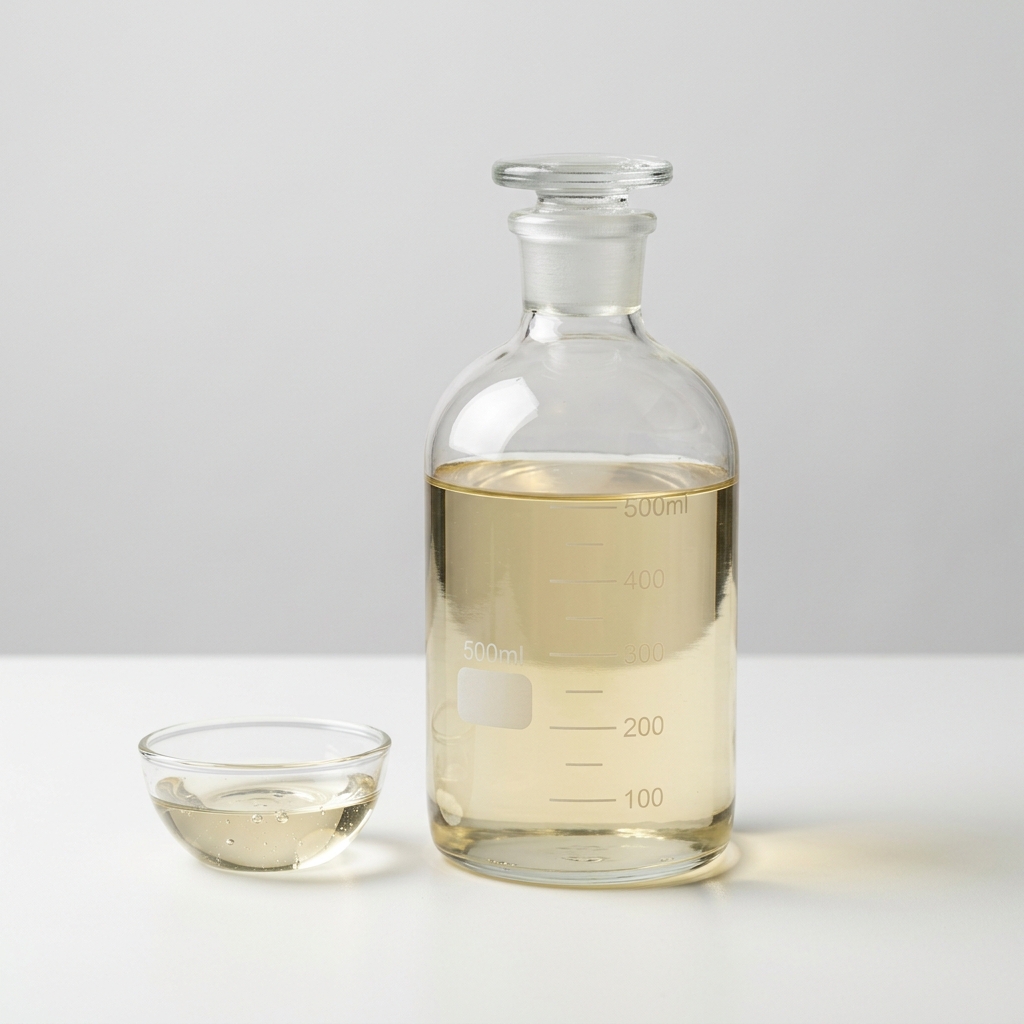
Cyclopentanol (C₅H₁₀O) is a secondary alcohol on a five-membered ring. It is used to introduce the cyclopentyl group into pharmaceutical, fragrance, dye and pesticide molecules, typically through esterification, etherification or conversion to a cyclopentyl halide. Dehydrogenation of cyclopentanol gives cyclopentanone.
The grade on this page is ≥99.0% by gas chromatography with water ≤0.5% (w/v).
Its flash point of 51 °C is well above those of cyclopentane (-37 °C) and cyclopentene (-29 °C). It is still a flammable liquid and should be stored at or below 37 °C.
Product identification
Product identification
| Product Name | Cyclopentanol |
| CAS Number | 96-41-3 |
| HS Code | 2906.19 |
| Molecular Formula | C₅H₁₀O |
| Molecular Weight | 86.13 g/mol |
| Purity | ≥99.0% (GC) |
| Appearance | Colorless viscous liquid |
Quality specification
Quality specification
Sales specification
| Parameter | Specification | Unit |
|---|---|---|
| Cyclopentanol (GC purity) | ≥ 99.0 | % |
| Water | ≤ 0.5 | % (w/v) |
What the limits mean
What the limits mean
Water ≤0.5% (w/v)
Water consumes reagent when cyclopentanol is converted to halides, esters or ethers. A 0.5% ceiling lets users calculate the drying step or reagent excess needed.
Storage at or below 37 °C
Stored at or below 37 °C, the product stays well below its 51 °C flash point.
Applications
Applications by industry
1
Pharmaceutical synthesis
Source of the cyclopentyl group in API intermediates.
Analgesic and other API intermediates
Cyclopentyl esters and ethers
Cyclopentyl halides
2
Fragrances, dyes and agrochemicals
Alcohol building block for specialty intermediates.
Fragrance ingredients and fixatives
Dye intermediates
Pesticide intermediates
3
Polymers and lubricants
Modifier and additive component.
Polymer modifiers
Lubricant components
Technical Specifications
Physical and chemical properties
| Parameter | Value | Unit |
|---|---|---|
| Density (20 °C) | 0.949 | g/cm³ |
| Boiling point | 140.9 | °C |
| Melting point | -19 | °C |
| Flash point | 51 | °C |
| Solubility in water | Slightly soluble | - |
| Refractive index (20 °C) | 1.4530 | - |
Packaging & Shipping
Packaging, storage and transport

Packaging
Iron drum – 200 kg
ISO tank – Bulk
Shipping & Storage
Storage: Store at or below 37 °C in closed containers in a well-ventilated area, away from ignition sources and strong oxidizers. Protect from light and moisture.
Hazardous: Yes - DG transport required
Origin: Produced by a large-scale C5 processing partner in Shandong, China. Easier Materials is the export partner.
Commercial terms: MOQ, lead time and delivery terms are quoted per enquiry.
Regulatory and transport data
| Item | Value |
|---|---|
| EC number | 202-504-8 |
| UN number | UN 2244 (cyclopentanol) |
| Transport class and packing group | Class 3 (flammable liquid), packing group III |
| GHS signal word | Warning |
| GHS hazard statements | H226 (flammable liquid and vapor). Individual supplier classifications list further health hazards, so the safety data sheet issued for the grade is the controlling document. |
| HS code | 2906.19 (alcohols; cyclanic, cyclenic or cycloterpenic, and their derivatives, not elsewhere specified in 2906.1) |
| Inventory listings | The substance is listed on the Australian AIIC and has a New Zealand HSNO approval (HSR001247, approved with controls). For EU REACH, a registration dossier for the substance is on the ECHA list; whether it covers a given import route is for the importer to confirm. |
| Further synonyms | Hydroxycyclopentane |
Application chemistry
Cyclopentanol is converted to the other cyclopentyl building blocks in a few steps. With HBr under reflux it gives cyclopentyl bromide, an intermediate for pharmaceutical and surfactant chemistry; reductive amination (directly, or through cyclopentanone) gives cyclopentylamine; esterification and etherification give cyclopentyl esters and ethers; and dehydrogenation returns cyclopentanone. Methylation, demonstrated at laboratory scale, gives CPME. The cyclopentyl group appears in several marketed active pharmaceutical ingredients, which is why the alcohol is bought as a source of that group.
Published manufacturing routes start from cyclopentene: acetic acid is added to form cyclopentyl acetate, which is then transesterified with methanol; a formic-acid variant goes through cyclopentyl formate, and the net result is hydration of cyclopentene. The older route hydrogenated cyclopentanone derived from adipic acid and is described in the literature as polluting.
How this grade compares
Published reagent grades of cyclopentanol are listed at ≥99.0% (GC) and at 99% (assay by GC ≥98.5%), so the content limit here corresponds to the higher of the two.
Documentation
Documentation
TDS and MSDS available on request
FAQ
Frequently Asked Questions
Related Products
Related Products
Request a Quote — Cyclopentanol
Receive a customized quote within 24 hours. Our technical team is ready to assist with specifications, compatibility, and pricing.